What you come for
Frontenpark brings the city’s military and industrial history into the same landscape. Defensive walls and former moats survive among the vegetation; the Sphinx district stands nearby. It is a good extension when you have finished the tiled passage and want to spend the rest of the afternoon outside.
Look at the walls
The fortifications date from the seventeenth century onwards. Maastricht stopped functioning as a fortified town in 1867, and surviving structures gradually became part of a different landscape. Warm stone walls now support wildlife, including the wall lizard. Stay on the paths and leave the masonry and plants undisturbed.
Combine it with Sphinx
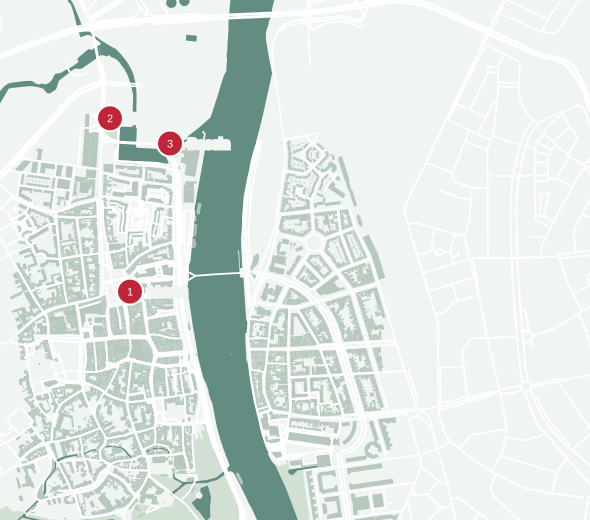
Begin with Sphinxpassage, then continue towards Frontenpark. Keep the park as the unhurried part of the outing: choose a short loop rather than trying to cover every path. Return towards the Bassin for food or a screening at Lumière. This gives the afternoon a clear beginning and end without another crossing of the city.
Before setting off
Wear shoes that suit outdoor paths, especially after rain. The park has changes of level and surviving defensive structures; anyone needing a step-free route should check the chosen entrance and path before setting out. For a shorter, more central green walk, choose the Stadspark beside Helpoort instead.