Start with the river
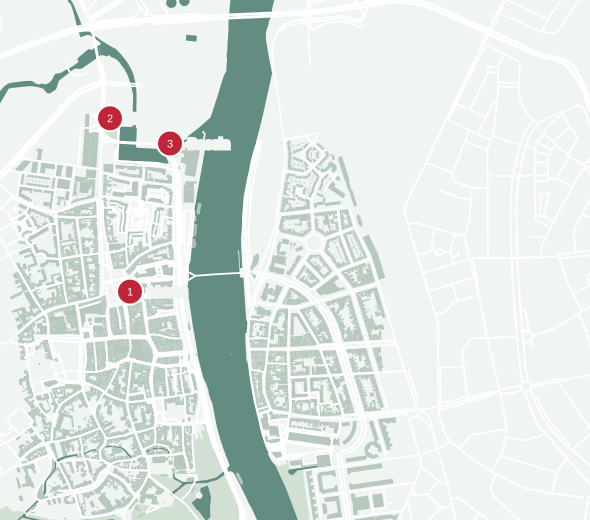
The Maas explains the location. A Roman settlement developed at a crossing on the route between the Channel coast and the Rhine. A bridge made this a place where people, goods and armies had to pass. The river still divides the centre into two useful halves: Wyck to the east and the old town to the west.
The Sint Servaasbrug you cross today is a later bridge, not the Roman one. On the west bank, a column with a stone lion marks the old crossing. The Roman road linked Boulogne-sur-Mer with Cologne; Maastricht was a stop on a much longer journey.
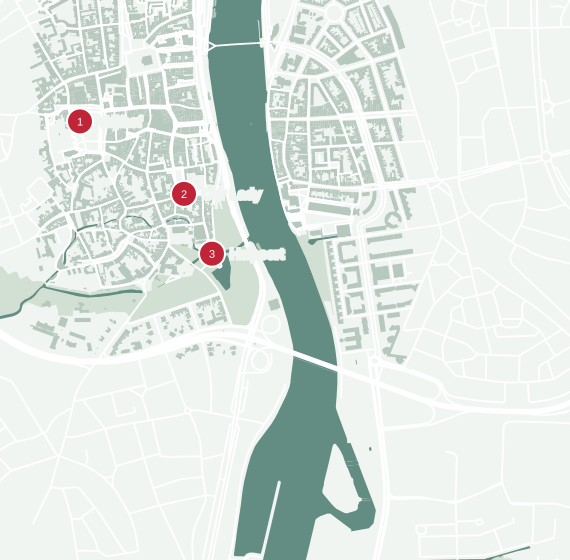
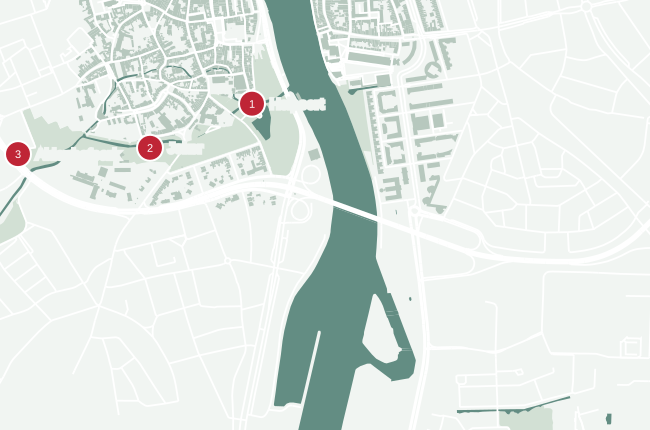
To follow this chapter on foot, begin at the bridge, walk south beside the Maas, then turn inland towards Onze Lieve Vrouweplein. The compact distances make it possible to fit the old centre into a morning; the historical layers take longer to disentangle.
Two rulers, two sets of walls
In 1204, Maastricht came under the joint authority of the duke of Brabant and the prince-bishop of Liège. The arrangement lasted for centuries. It helps explain why the city's history does not follow a tidy national storyline: the border on a modern map came after many of its institutions and buildings.
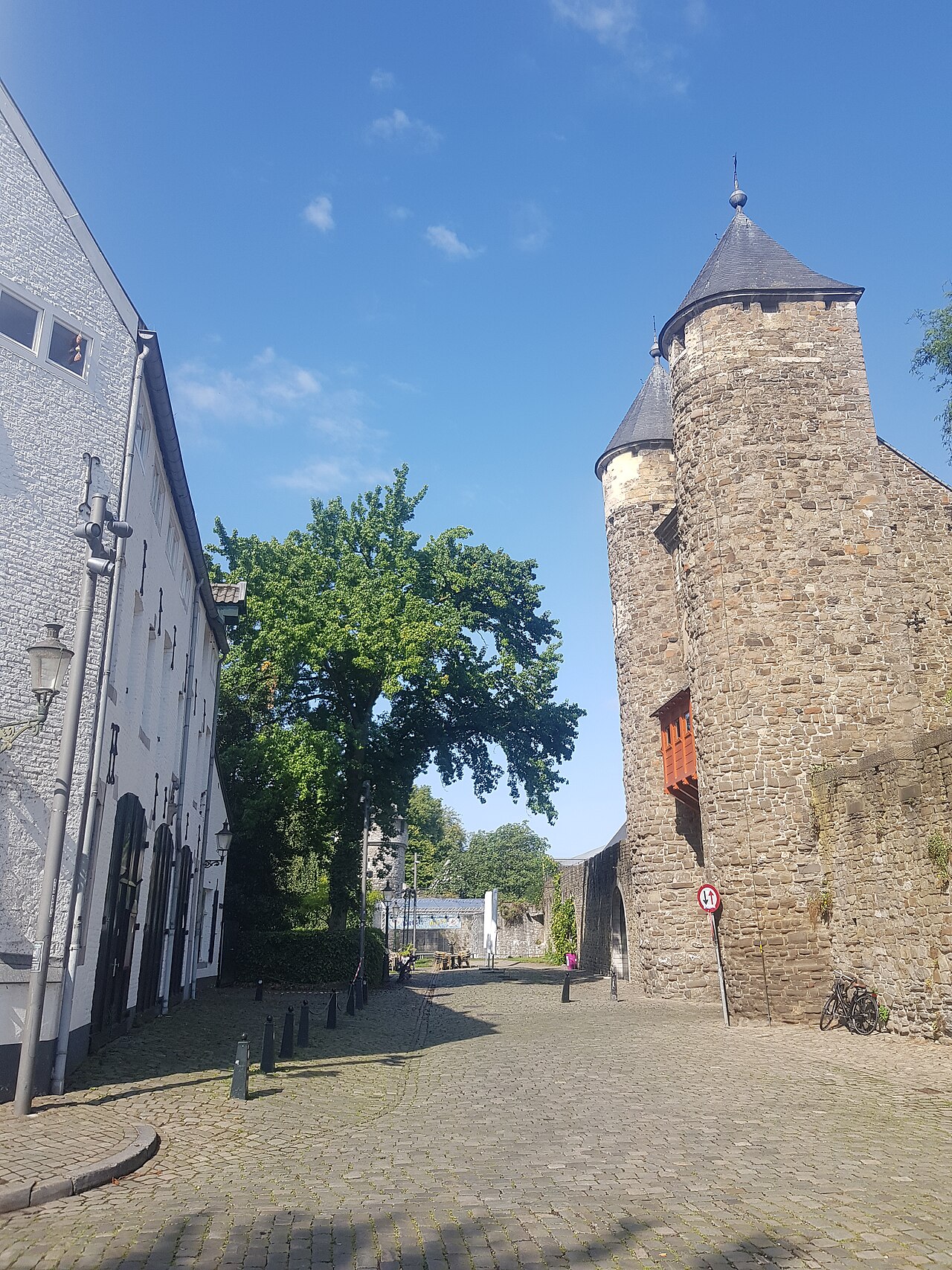
Permission for a stone city wall was granted in 1229. As the population and built-up area grew, a larger defensive circuit followed in the fourteenth century. Helpoort and the surviving walls around the Jekerkwartier are the easiest places to see that fortified city today.
Walk through Helpoort, then follow the park edge towards the Jeker. Notice the different heights and alignments of the masonry. These are fragments of changing defences, rather than a single complete wall around the modern centre. You can enjoy the exterior without arranging a museum visit; check separately if you want to go inside the gate.
The real d’Artagnan died here
The musketeer behind Alexandre Dumas's fictional character was killed during the siege of Maastricht in 1673. The city was attacked by the army of Louis XIV. A statue in Aldenhofpark commemorates him, a short detour west of the Jekerkwartier.
The statue is a useful stop if you are already walking the park, rather than a reason to cross the city on its own. Pair it with the walls: the open green space around you once had a defensive purpose. Maastricht's military position made it valuable, but also repeatedly exposed the people inside to siege.
For a more physical sense of those defences, take a guided tour of Fort Sint Pieter. The fort above the city belongs to a later phase of its military history. It is a separate visit from the underground limestone quarries, even though both are reached from the same part of town.
The factories changed the city
In the nineteenth century, Maastricht became an industrial city. Petrus Regout's glass and ceramics businesses employed thousands. Sphinx is the name to look for: its surviving buildings north of the Markt give this part of town a scale quite different from the small streets around the churches.
The Sphinxpassage tells the manufacturing story in tiled panels. It also covers the labour behind the products, including child labour and dangerous night work. Allow time to read it rather than treating the passage as a photo backdrop.
At the Bassin, the contrast with the medieval centre is immediate: water, industrial buildings and much larger spaces. The old buildings now house cultural venues and places to eat. Our Sphinx guide links the passage, harbour and cinema into one walk.
What the Maastricht Treaty actually did
The Treaty on European Union was signed here on 7 February 1992 and entered into force on 1 November 1993. It established the European Union, introduced EU citizenship and set the course towards economic and monetary union. Euro notes and coins came later, in 2002.
The signing took place at the provincial government buildings, south of the centre. It did not happen in the town hall on the Markt. If you have a strong interest in European history, include the provincial government area in your plans; for a short first visit, the old centre gives you more to see within walking distance.
The treaty is one reason Maastricht's name is familiar abroad. It is only one chapter of a city whose physical character owes at least as much to pilgrimage, fortification and the ceramics industry.
A history walk in the right order
Start at Sint Servaasbrug for the crossing, continue to Onze Lieve Vrouweplein, then go south to Helpoort and the city walls. Add Aldenhofpark for d’Artagnan. Return north through the centre, passing the Vrijthof and Markt, and finish at Sphinxpassage and the Bassin.
Give this a full afternoon if you intend to stop and read. There is no need to enter every building. Choose one interior, leave room for food, and use the rest of the route to see how the city changes from riverfront to church square to factory district.