Enter by Helpoort
Come in from the Jekerkwartier and pass Helpoort, the old gate at the edge of the park. Pause on both sides: from one direction it reads as an entrance to the historic town, from the other as part of a larger defensive landscape.
The route is short enough to leave open-ended. You can follow the path beside the wall, continue by the Jeker, or sit under the trees. It is a better choice for an unhurried hour than for somebody trying to tick off every fortification.
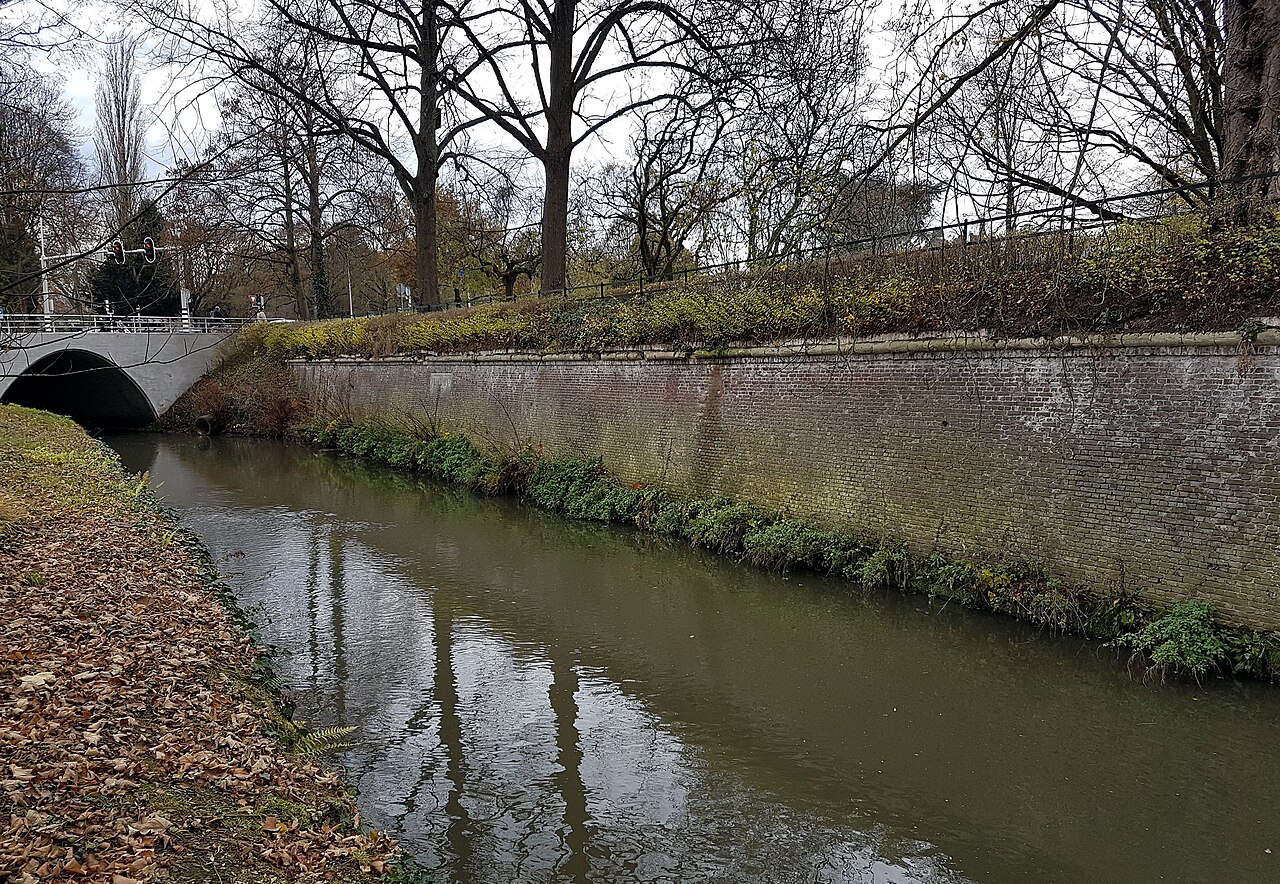
Look for the water and walls
The Jeker does much of the work of shaping this part of Maastricht. Paths turn with the water, while surviving walls and bastions explain why the park has an irregular outline. The oldest park area dates to the nineteenth century.
Do not treat every stretch of masonry as belonging to one period. Maastricht expanded and altered its defences repeatedly. The park is interesting because those layers sit next to ordinary city life: a path to school, a bench, a patch of shade.
Continue into the Jekerkwartier
For a longer outing, leave the park towards the narrow streets of the Jekerkwartier. Bisschopsmolen makes a natural food stop nearby; its watermill gives the Jeker a second role beyond the scenery. Check the bakery’s opening hours if that is part of the plan.
Another option is to turn back through the old centre and finish at Onze-Lieve-Vrouweplein. Either route avoids retracing every step. With children, keep the circuit compact and let the park be the main event.
Make space for the weather
The paths are outdoor city paths, with the usual changes in surface and conditions after rain. There is no need for special hiking gear, but a wet morning can make a museum-first day more appealing.
For a longer green walk, use the Sint Pieter routes rather than stretching this park visit into a trek. Stadspark works because it is close and easy to leave: you can return to the centre whenever the weather, appetite or company changes.