Start with the crossing
The Roman settlement grew around a crossing of the Maas. That explains the site more clearly than a claim that every old-looking stone in the centre is Roman. Begin at the river, then walk towards Onze-Lieve-Vrouweplein, where the area of the late Roman fort lay.
The present streets are the result of many later centuries. It helps to think in layers: Roman movement across the river, medieval religious buildings, then the shops and cafés of the city you see today. The walk is short, but most of the evidence needs explanation.
Look below the square
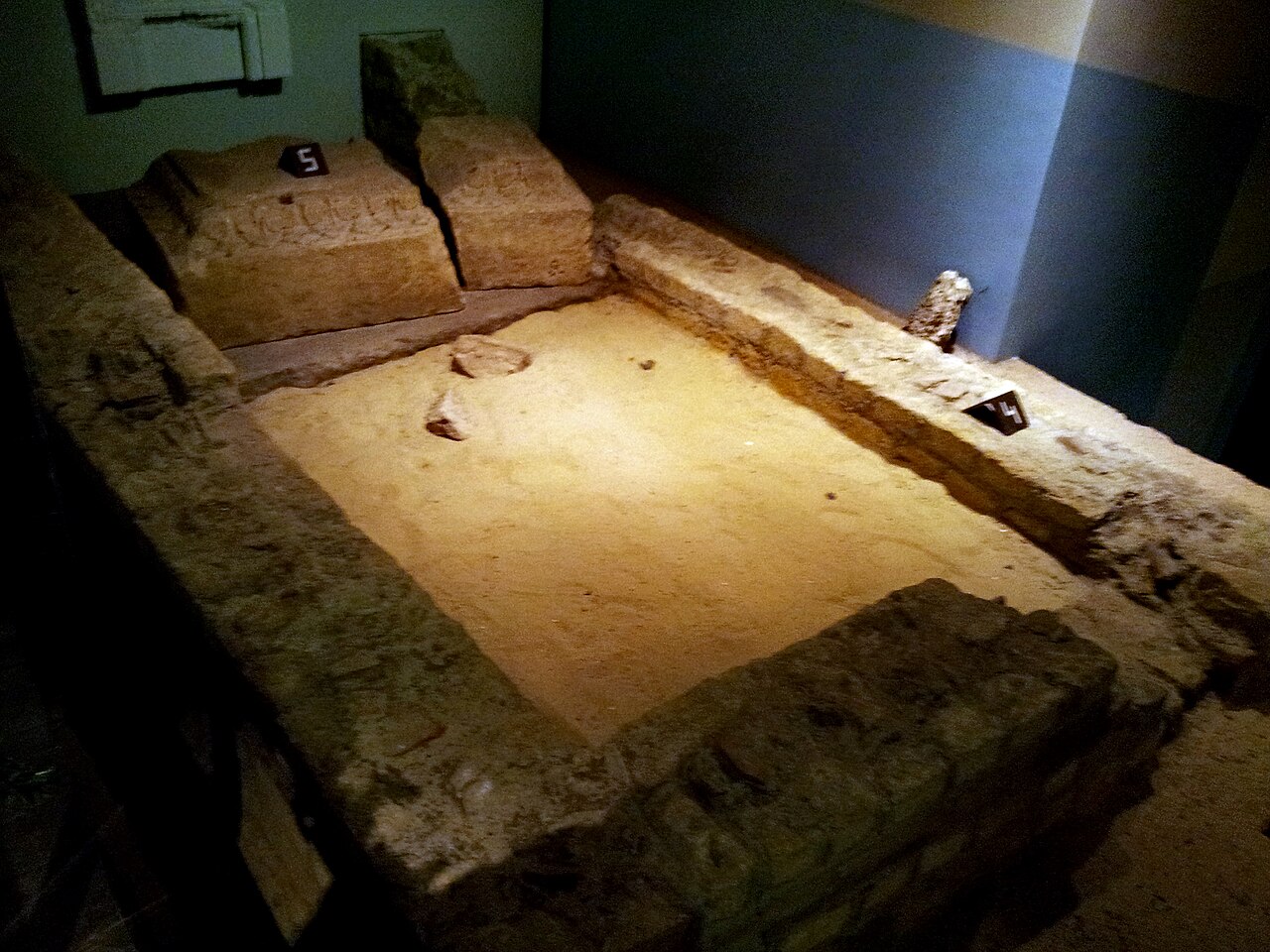
The museum cellar at Hotel Derlon preserves remains found during building work in 1983, including traces of a Roman sanctuary. Its archaeological fragments span a long period, from before the beginning of the Common Era to late Roman Maastricht. Check access with the venue before assuming the cellar is open.
The cellar is the useful counterpoint to a street walk: it shows why an apparently ordinary address can matter. If you can visit, leave time to read the displays rather than treating it as a quick photo stop.
Read the basilica carefully
The Basilica of Our Lady stands close to the former fort area. Large stone blocks from the Roman castellum were reused in its construction. Reuse is not the same as a surviving Roman church; the present building belongs to later history.
That distinction makes the site more interesting. A material can travel from one purpose to another while the city changes around it. Look at the scale of the stonework, then step back into the square to see how little of the ancient layout is legible above ground.
Finish at the museum or river
If the Derlon cellar is unavailable, the Roman route still works as an outdoor introduction, but do not present it as a tour of visible ruins. Return to the river or add the Maastricht Museum for broader city context.
A guide-led archaeological walk is the better option if you want precise locations and dates. For a first visit, keep the idea simple: the crossing explains where Maastricht began, and the remains under the centre show how much later Maastricht sits on top of it.